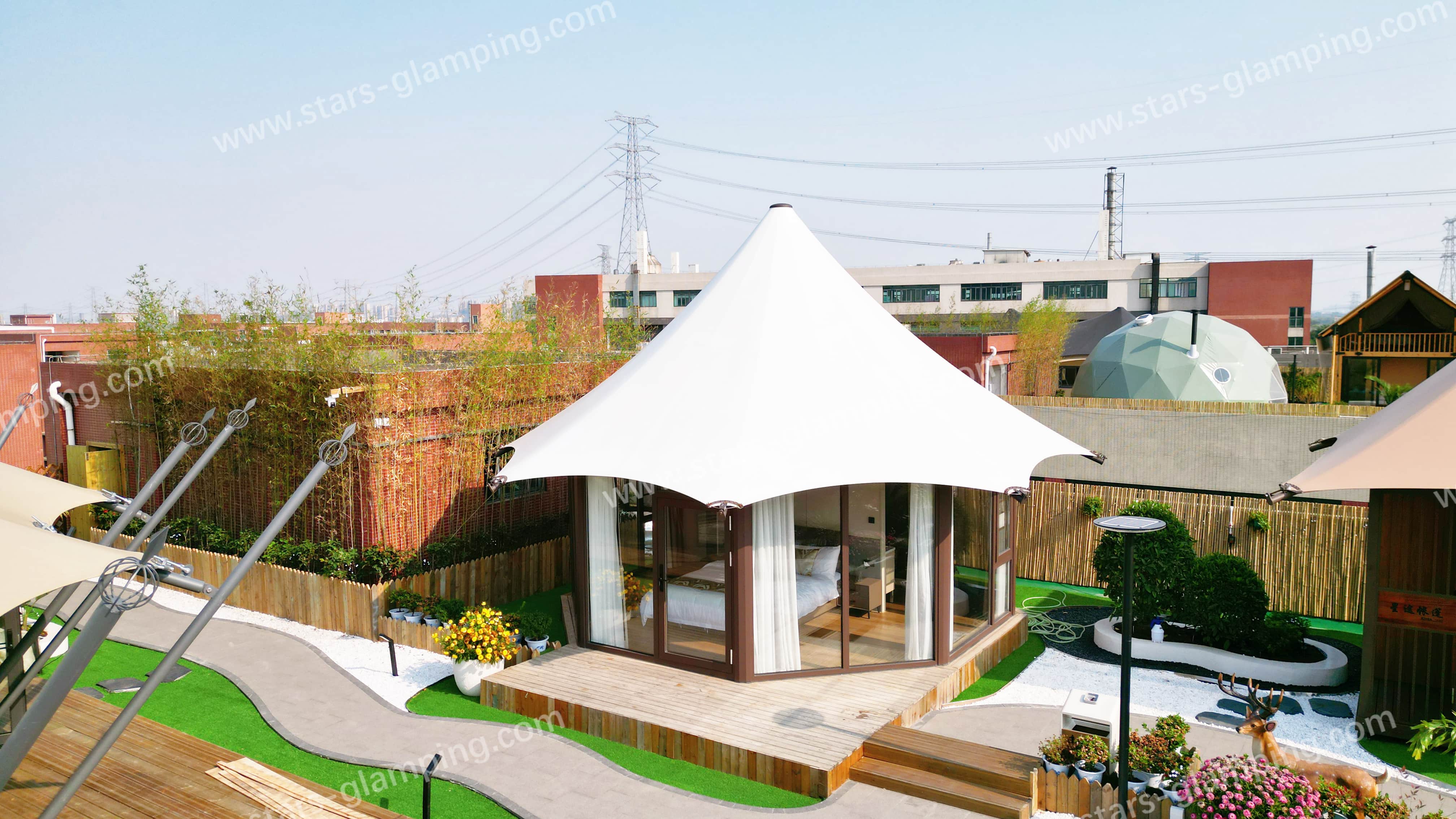
Heating and cooling a glamping tent is not a matter of dropping a portable air conditioner into a canvas shell. It is a building-envelope problem. The same variables that determine whether a hotel room holds its temperature — insulation continuity, air infiltration, vapor management, and glazing performance — decide whether a glamping unit stays comfortable in a desert summer or a mountain winter. Operators who treat climate control as an engineering decision rather than an appliance purchase consistently report lower energy costs and steadier guest satisfaction.
Why Climate Control Determines Glamping Profitability
Glamping guests pay a premium for comfort in a natural setting. When a tent overheats at midday or turns cold after sunset, the value proposition collapses, reviews suffer, and the unit's usable season narrows. Season length is the single largest lever on revenue per unit, which is why thermal performance deserves to be specified at the design stage alongside structure and aesthetics.
How a Tent Loses and Gains Heat
Four mechanisms drive temperature drift inside a glamping tent.
Conduction and radiation through the membrane. Single-layer canvas or thin PVC behaves almost like glass in solar gain. A multi-layer building envelope interrupts both pathways by separating an outer weathering surface from an inner lining with an insulating core between them.
Air infiltration at seams, connections, and door frames. Gaps that seem trivial at 20 degrees become significant at minus 5. Modular structural connections that are engineered to close precisely outperform field-cut assemblies.
Condensation. Trapped moisture degrades insulation value and interior materials. A breathable interior lining allows vapor to migrate outward rather than saturating the wall build-up.
Glazing area. Panoramic domes and large windows deliver the views guests came for, but they also exchange the most heat. Glazing specification decides how much of that view can be retained without sacrificing thermal comfort.
Passive Strategies Come First
Active heating and cooling work most efficiently when the envelope does most of the work.
- Shade and orientation. Position units so that the largest glazed surfaces avoid peak afternoon sun in cooling-dominant climates, and face them toward winter sun in heating-dominant climates.
- Ventilation strategy. High and low openings create stack effect, purging hot air in the evening. Interior fabrics with high density, such as 900D interior fabrics, support ventilation and thermal stability in varied outdoor environments.
- Thermal mass and floor insulation. An insulated floor platform removes the cold-bridge that makes underfloor radiant systems effective rather than wasteful.
- Zoning. Sleeping areas, bathrooms, and living zones have different loads. Planning interior partitions early allows smaller, more efficient equipment.
Heating a Glamping Tent
Once the envelope is specified, heating selection becomes straightforward. The most common approaches are:
- Electric radiant panels for small footprints and quick response.
- Heat pumps that provide both heating and cooling from one unit, the usual choice where grid power is reliable.
- Ducted or split systems for multi-room layouts that require zoned control.
- Solid-fuel or propane stoves where guests expect an open flame as part of the experience. These demand clearances, ventilation, and fire-rated materials.
The critical constraint is fire safety. Any heat source placed near membrane surfaces makes fire retardancy a design requirement rather than an optional upgrade. Materials independently tested to DIN 4102 B1 standards give operators a documented basis for specifying stoves and heaters with confidence.
Cooling a Glamping Tent
Cooling raises different challenges, particularly in desert and coastal hospitality settings where intense UV radiation and high ambient temperatures combine.
- Reduce solar gain before adding capacity. A reflective outer membrane and an insulated core cut the load the air conditioner must remove.
- Size for the envelope, not the floor area. Well-insulated units need smaller equipment, which lowers both capital cost and running cost.
- Address humidity, not just temperature. In tropical and coastal environments, dehumidification matters as much as cooling for guest comfort and for preventing mold in interior materials.
- Plan power supply. Remote locations may require solar arrays with battery storage, which makes low-load design a financial necessity rather than a preference.
What to Look for in a Climate-Ready Tent Platform
An integrated manufacturer that controls structure and materials can resolve thermal questions at the source. Yuntu Tent (Guangzhou Yuntu Tent Technology Co., Ltd.), operating under the StarsGlamping brand, approaches glamping accommodation as a construction problem rather than an equipment package.
Its PVDF Luxury Tent Collection is positioned for extreme environments including deserts, coasts, and high altitudes. The envelope combines a 1050g/m² PVDF membrane, an insulated core, and a breathable lining — a configuration designed to address condensation and thermal insulation challenges simultaneously. The Galvanized Steel Frame uses hot-dip galvanized structural members with modular connections, which eliminates on-site welding, speeds installation, and reduces the uncontrolled air gaps that undermine thermal performance.
The structural rating matters to climate control because comfort depends on the building surviving its environment. The platform is engineered to withstand wind loads of Force 10–12 and is compliant with international fire-retardant standards, with products carrying CE Certification under EN ISO 5912:2020, along with REACH and RoHS compliance and SGS and HAP material performance certifications.
For heating-dominant and forest settings, the Safari Tent Collection pairs Finnish preservative-treated timber structures with high-density interior fabrics. For destinations where visual impact drives bookings, the Glamping Dome Collection offers 360-degree panoramic views in polycarbonate or insulated glass systems, allowing operators to specify glazing that preserves the view without abandoning thermal comfort.
Validating Performance Before Purchase
Specification documents only go so far. Yuntu Tent operates a 20,000 m² intelligent manufacturing campus and showroom in Nansha District, Guangzhou, where clients can evaluate thermal performance, material durability, and interior layouts firsthand. The facility holds a portfolio of 50+ registered patents covering structural engineering, industrial design, and modular construction systems, and the group reports delivery of more than 1,350 hospitality and tourism projects across mountain, coastal, desert, and tropical environments.
Maintenance and Lifetime Cost
Heating and cooling economics extend beyond energy bills. The PVDF platform is engineered for a service life exceeding 8 years under normal operating conditions, and high-performance materials reduce maintenance frequency. That durability supports the value-based pricing model behind the Plan-Design-Manufacture-Deliver turnkey approach: lower lifetime operating cost rather than the lowest initial price.
Practical Checklist
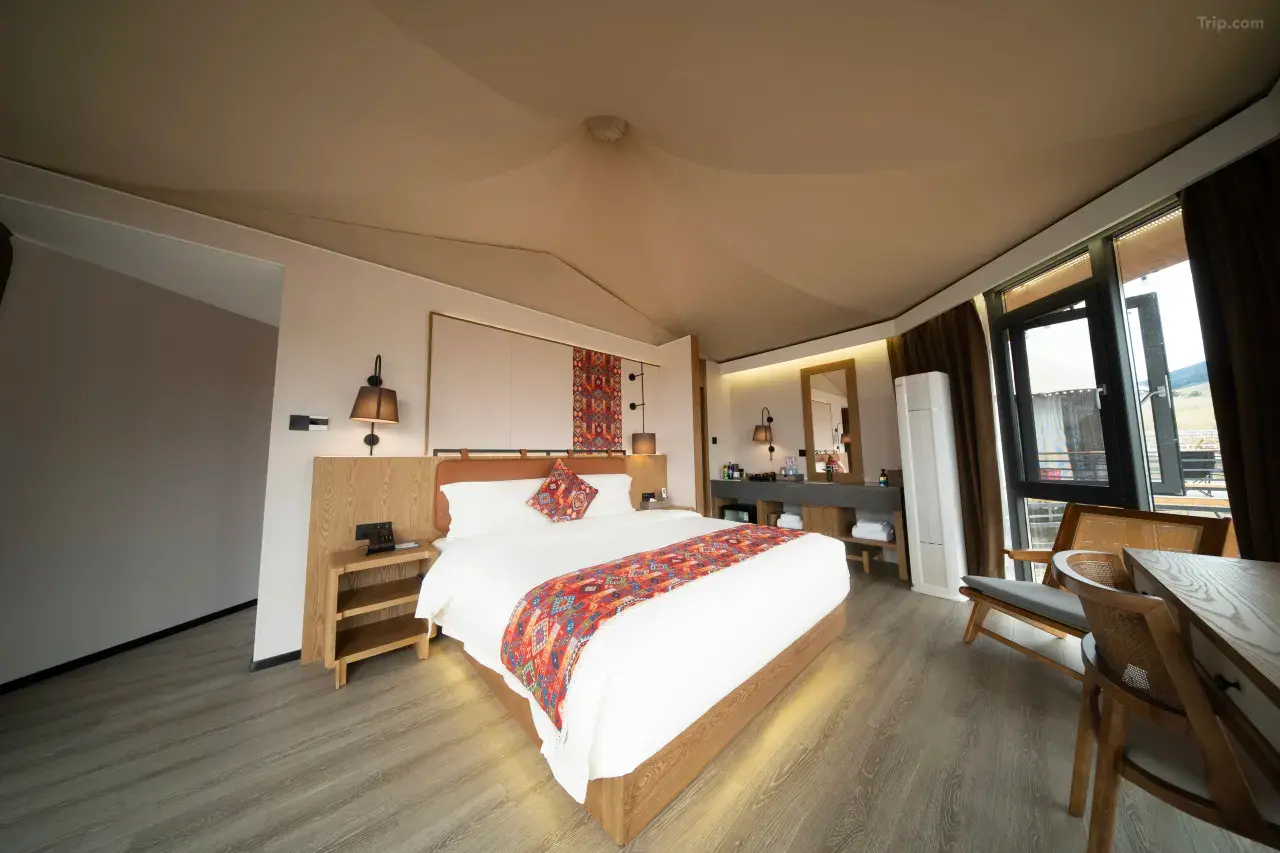
Operators evaluating climate control should confirm the membrane build-up and its solar performance, the fire rating of interior materials, the airtightness of structural connections, glazing specification and orientation, ventilation paths for summer purging, and the power capacity available for heating and cooling equipment. Addressing these at design stage is considerably less expensive than retrofitting them after the first cold snap or heat wave.
www.stars-glamping.com
Stars Glamping Tent Co.,Ltd
About Author