
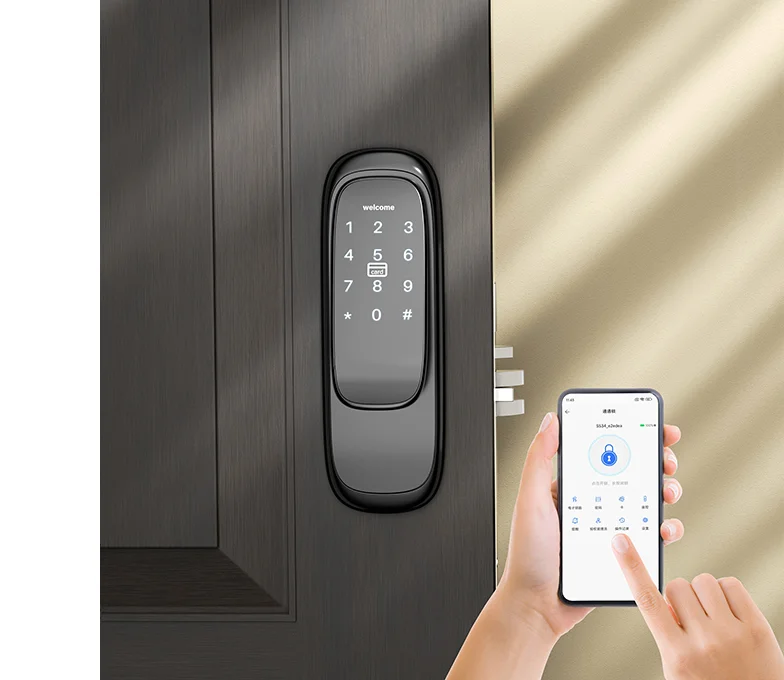
In today’s fast-changing hospitality industry, guest expectations have shifted dramatically. Modern travelers no longer see hotel access as a simple mechanical function. Instead, they expect speed, convenience, and seamless digital experiences from the moment they arrive. This transformation has made keyless entry solutions with RFID hotel door locks one of the most important technologies in modern hotel management.
RFID (Radio Frequency Identification) hotel door locks are now widely used across boutique hotels, business hotels, resorts, and global hotel chains. They replace traditional mechanical keys with secure digital credentials, allowing guests to enter rooms with a simple tap of a card—or even without a physical card at all in advanced systems.
This article explores how RFID-based keyless entry systems work, why hotels are rapidly adopting them, and how they improve both security and operational efficiency.
1. The Evolution of Hotel Key Systems
Hotel door access has gone through several stages of development over the past decades.
1.1 Mechanical Keys Era
Traditional hotels relied on metal keys. While simple, they had major limitations:
-
Easy to lose or duplicate
-
Expensive rekeying process
-
No tracking of usage
-
Weak security control
As hotel operations scaled, mechanical keys became inefficient and risky.
1.2 Magnetic Stripe Cards
The next step was magnetic stripe cards. These improved convenience but still had issues:
-
Cards easily demagnetize
-
Limited durability
-
Moderate security level
-
Frequent replacement required
Although widely used in the past, magnetic systems are now gradually being replaced.
1.3 RFID Hotel Door Locks Era
RFID technology introduced a new standard for hotel access control. It enabled:
-
Contactless entry
-
Strong encryption
-
Digital access management
-
Seamless integration with hotel systems
Today, RFID has become the dominant technology in electronic hotel door locks worldwide.
2. What Are RFID Hotel Door Locks?
RFID hotel door locks are electronic locking systems that use radio frequency technology to authenticate access credentials.
Instead of inserting a key or swiping a card, guests simply tap an RFID card or device near the lock. The system then verifies encrypted data and grants or denies access instantly.
Key components include:
-
RFID key cards or digital credentials
-
Electronic door lock hardware
-
Hotel management software (PMS system)
-
Encoder devices at the front desk
This system creates a fully digital and controlled access environment for hotels.
3. How RFID Keyless Entry Systems Work
The process of RFID hotel access is simple but highly secure.
Step-by-step workflow:
-
Guest checks in at reception or online
-
Hotel system generates a unique RFID credential
-
The credential is encoded onto a key card or mobile system
-
Guest receives access permission linked to a specific room and time period
-
At the room door, the RFID lock reads the credential
-
System verifies encryption and authorization
-
Door unlocks within milliseconds
If credentials are invalid, expired, or revoked, access is immediately denied.
4. Why RFID Is the Preferred Keyless Entry Solution
Hotels are rapidly replacing traditional systems with RFID-based hotel electronic door locks because of several clear advantages.
4.1 Fast and Seamless Access
RFID locks respond almost instantly. Guests can enter rooms without delays, improving overall satisfaction.
4.2 Contactless Operation
No physical contact is required beyond tapping a card, making it more hygienic and modern.
4.3 High-Level Security
RFID systems use encrypted communication that is extremely difficult to clone or hack.
4.4 Easy Management
Hotel staff can issue, update, or cancel access credentials instantly through software.
4.5 Reduced Operational Costs
Hotels save money on:
-
Rekeying locks
-
Lost key replacements
-
Front desk manual work
5. Keyless Entry Solutions in Different Hotel Types
RFID-based keyless entry solutions are flexible and scalable, making them suitable for all hotel categories.
5.1 Boutique Hotels
Boutique hotels focus on design and guest experience. RFID systems help them:
-
Maintain stylish and minimal door hardware
-
Offer modern, tech-driven guest experiences
-
Reduce front desk workload
Some boutique hotels combine RFID with mobile key systems for premium guest interaction.
5.2 Business Hotels
Business travelers value speed and efficiency.
RFID systems allow:
-
Fast check-in and check-out
-
Reliable access during short stays
-
Integration with corporate booking systems
This ensures smooth operation even during peak hours.
5.3 Resorts
Resorts often cover large areas with multiple access zones.
RFID systems can manage:
-
Guest room access
-
Spa and gym entry
-
Pool and VIP area control
-
Staff-only zones
This makes RFID ideal for complex hospitality environments.
5.4 Large Hotel Chains
Global hotel chains require centralized control across multiple locations.
RFID systems support:
-
Cloud-based access management
-
Multi-property synchronization
-
Standardized guest experience worldwide
-
Real-time monitoring and reporting
This scalability is one of the biggest advantages of RFID technology.
6. Integration with Smart Hotel Systems
Modern RFID hotel door locks are part of a broader smart hotel ecosystem.
They can integrate with:
-
Property Management Systems (PMS)
-
Online booking platforms
-
Mobile check-in applications
-
Energy management systems
For example, when a guest enters a room using RFID access, the system can automatically activate lighting, air conditioning, and personalized settings.
This creates a fully connected and automated guest experience.
7. Security Features of RFID Hotel Door Locks
Security remains the core advantage of RFID-based systems.
7.1 Encrypted Communication
All data between the card and lock is encrypted to prevent interception.
7.2 Time-Limited Access
Access automatically expires after checkout or defined time periods.
7.3 Audit Trail Logging
Every door access attempt is recorded for monitoring and investigation.
7.4 Anti-Cloning Protection
RFID credentials are designed to prevent duplication or unauthorized copying.
7.5 Emergency Override Options
Authorized staff can access rooms in emergencies when necessary.
8. Operational Benefits for Hotels
Beyond guest convenience, RFID keyless entry systems deliver strong operational advantages.
8.1 Reduced Front Desk Workload
Automated key issuance reduces manual tasks for staff.
8.2 Improved Staff Management
Housekeeping and maintenance access can be controlled precisely.
8.3 Faster Room Turnover
Efficient access management speeds up cleaning and preparation.
8.4 Better Security Oversight
Hotels can monitor all access events in real time.
9. Installation and Maintenance Considerations
Before implementing RFID electronic hotel door locks, hotels should consider several important factors:
9.1 Door Compatibility
Most RFID locks fit standard hotel doors, but older properties may require modifications.
9.2 System Integration
Proper integration with PMS is essential for full functionality.
9.3 Staff Training
Employees must understand how to issue cards and manage access rights.
9.4 Battery Maintenance
Most RFID locks operate on batteries lasting 8–12 months and require periodic replacement.
10. Future Trends in RFID Keyless Entry Systems
The future of hotel access control is moving toward more intelligent and connected systems.
10.1 Mobile Key Integration
Smartphones are becoming a primary access method alongside RFID cards.
10.2 Cloud-Based Hotel Management
Hotels can manage access across multiple properties in real time.
10.3 AI-Driven Security Monitoring
Artificial intelligence will help detect abnormal access behavior and potential risks.
10.4 Fully Contactless Hospitality
From booking to room entry, the entire guest journey will become digital and contactless.
Conclusion
Keyless entry solutions with RFID hotel door locks have transformed the hospitality industry by combining security, convenience, and operational efficiency into one system.
They eliminate the limitations of traditional keys, reduce operational costs, and significantly improve guest experience. Whether in boutique hotels, business hotels, resorts, or global hotel chains, RFID-based electronic hotel door locks have become an essential standard for modern hospitality.
As technology continues to evolve, RFID systems will remain at the core of smart hotel infrastructure, paving the way toward fully automated, secure, and seamless guest experiences worldwide.
www.coconano.net
coconano
About Author