As data centers continue to expand and network traffic increases, businesses are looking for ways to improve bandwidth without significantly increasing infrastructure costs. The 25G SFP28 transceiver has become an important option for organizations seeking a practical balance between network performance, deployment costs, and long-term operating efficiency.
Quantex Tech Limited, a networking technology provider based in Shenzhen, serves a market increasingly focused on affordable, high-performance connectivity. For data center operators and enterprise network teams, the value of 25G SFP28 extends beyond the initial purchase price. Material sourcing, manufacturing efficiency, power consumption, product lifespan, and recycling opportunities can all influence the total cost of ownership.
The following analysis explores how these factors contribute to the cost-effectiveness of 25G SFP28 transceivers and why they matter when planning network upgrades.
Silicon and Optical Materials: Building a Cost-Efficient Supply Chain
When assessing the cost-effectiveness of high-speed optical connectivity, it is important to look beyond the purchase price and consider the materials and components used in manufacturing.
A 25G SFP28 transceiver relies on multiple components, including semiconductor devices, optical elements, electronic circuitry, and a housing designed to meet the requirements of the intended application. The cost and availability of these components can directly affect manufacturing expenses and product pricing.
For networking suppliers, maintaining dependable relationships with qualified component manufacturers can help improve supply stability and reduce exposure to unexpected market fluctuations. Long-term sourcing arrangements may also support more predictable procurement planning and production scheduling.
Quantex Tech Limited operates in a market where efficient sourcing and supply-chain management are important considerations for delivering competitive networking products. By managing component procurement and production requirements carefully, suppliers can work toward controlling manufacturing costs while maintaining the performance standards expected by customers.
Efficient sourcing does not mean choosing materials based on price alone. Component consistency, compatibility, reliability, and supplier quality controls must also be considered. These factors can influence product yields, maintenance requirements, and the overall cost of operating a network.
Ultimately, a well-managed supply chain is an important foundation for making 25G SFP28 technology accessible to businesses that need higher bandwidth without unnecessary spending.
Responsible Material Sourcing and Long-Term Component Reliability
Material sourcing can affect more than the immediate manufacturing cost of an optical transceiver. Supply-chain transparency and responsible procurement practices may also influence long-term business risks.
Networking hardware can contain metals and other materials that require careful sourcing and processing. When suppliers fail to address environmental, labor, or regulatory concerns, they may face supply interruptions, compliance challenges, or reputational damage. Such problems can create additional costs throughout the manufacturing and distribution process.
Responsible procurement helps companies identify these risks and develop more resilient sourcing strategies. Clear supplier requirements, material documentation, and ongoing assessments can improve visibility across the supply chain.
For manufacturers and networking solution providers, these practices can support more stable production planning and reduce the likelihood of unexpected procurement problems. They can also help customers evaluate suppliers against their own environmental, social, and governance requirements.
Quantex Tech Limited's position in the networking market highlights the importance of considering the broader supply chain when evaluating 25G SFP28 products. Buyers should review the supplier's available documentation and procurement policies rather than assuming that responsible sourcing practices are in place.
From a cost perspective, the benefits of supply-chain responsibility are often indirect but meaningful. More predictable procurement, fewer disruptions, and better risk management can all contribute to the long-term affordability of networking hardware.
Understanding Energy Consumption and Operational Savings
The real cost of a networking component is not limited to the amount paid at purchase. Power consumption, cooling requirements, and maintenance can also contribute to operating expenses over the product's service life.
For data center operators, these costs become increasingly important as network infrastructure expands. Even relatively small differences in power consumption can accumulate when equipment is deployed across a large number of ports.
The energy requirements of a 25G SFP28 transceiver depend on its design, optical specifications, operating conditions, and compatibility with the host equipment. Buyers should therefore compare the power specifications of the actual modules under consideration instead of assuming that all products have identical energy performance.
Manufacturing efficiency also plays a role in a product's overall environmental footprint. Monitoring electricity use, optimizing production processes, and reducing unnecessary material consumption can help manufacturers identify opportunities to improve operational efficiency.
For Quantex Tech Limited and other suppliers in this market, effective resource management can support both manufacturing performance and more competitive product offerings. However, lower production costs do not automatically translate into lower power consumption during customer use; these are separate factors that should be evaluated individually.
When selecting a 25G SFP28 transceiver, buyers should consider its specified power consumption alongside compatibility, transmission distance, operating temperature, and network requirements. This provides a more complete basis for comparing long-term costs.
End-of-Life Value and the Benefits of Recyclable Design
The lifecycle of a networking product does not necessarily end when it is removed from service. Depending on its condition, compatibility, and technical requirements, a retired optical module may be suitable for refurbishment, reuse, or material recovery.
These options can help businesses manage electronic waste while making better use of existing resources. Recyclable materials may also provide value through appropriate recovery processes, although the actual economic benefit depends on collection costs, processing methods, and material market prices.
Product design can influence how easily a module is inspected, repaired, disassembled, or recycled. Modular construction and accessible component arrangements may simplify certain end-of-life processes, provided they are compatible with the product's technical and safety requirements.
For networking suppliers, considering recyclability during product development can form part of a broader approach to lifecycle management. For customers, it may also be useful to ask about available recycling guidance, refurbishment options, and end-of-life handling procedures.
Quantex Tech Limited's 25G SFP28 product offering can be evaluated within this wider discussion of lifecycle cost and resource efficiency. Buyers should confirm the specific recycling, refurbishment, or take-back services available for the products they intend to purchase.
A comprehensive cost assessment should consider not only the initial investment but also expected service life, replacement requirements, reuse opportunities, and disposal arrangements. These factors can help organizations make more informed decisions about network infrastructure spending.
Applying Circular Economy Principles to Data Center Upgrades
Circular economy strategies are becoming increasingly relevant to organizations that want to control equipment costs while managing electronic waste more responsibly.
In data centers, extending the useful life of compatible equipment can help reduce unnecessary replacement spending. Depending on the application, organizations may be able to reuse existing infrastructure, redeploy tested components, or select compatible optical modules that meet their network requirements without requiring a complete system replacement.
Refurbishment can also be an option when a module has been properly inspected and verified. Before redeploying any used transceiver, however, operators should confirm its condition, compatibility, performance, and suitability for the intended network environment.
A cost-effective upgrade strategy begins with a clear understanding of existing infrastructure. Network teams should assess switch compatibility, supported optical standards, required transmission distances, fiber types, and deployment conditions before selecting new modules.
The 25G SFP28 form factor can support bandwidth upgrades in compatible network environments, but the overall savings depend on the existing equipment and the scope of the project. In some cases, replacing selected components may be more economical than a broader infrastructure overhaul.
For Quantex Tech Limited and other networking suppliers, lifecycle planning is an important part of the wider value proposition. By considering compatibility, service life, maintenance, and responsible end-of-life handling, buyers can evaluate the financial and operational implications of a 25G network upgrade more effectively.
Environmental responsibility and cost control can complement each other when reuse and recycling programs are supported by appropriate testing, documentation, and quality management.
Reducing Manufacturing Waste Through Precision and Process Control
Manufacturing efficiency is another important factor in determining the cost of high-speed optical transceivers.
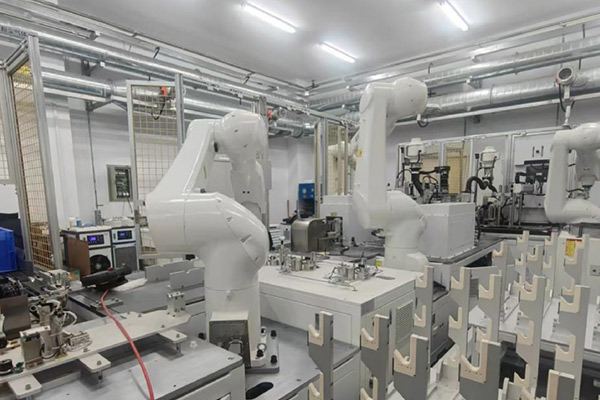
Producing networking components involves multiple stages, including component assembly, optical alignment, calibration, testing, and final inspection. Variations during these processes can lead to defects, rework, material waste, and higher production costs.
Lean manufacturing principles aim to reduce unnecessary steps, improve workflow, and make better use of labor and materials. When combined with suitable automation and quality-control procedures, these methods can help manufacturers improve consistency and production efficiency.
Automated inspection can support the identification of assembly defects and performance deviations, while standardized production procedures help reduce variation between units. Careful process monitoring also allows manufacturers to investigate recurring problems and make targeted improvements.
For optical transceivers, quality control must extend beyond visual appearance. Depending on the product and applicable specifications, verification may include optical performance, transmission characteristics, compatibility, temperature behavior, and other relevant functional tests.
Improving production yield can reduce the amount of material and labor required for each accepted unit. These efficiencies may help manufacturers maintain competitive pricing while preserving the technical performance customers expect.
Quantex Tech Limited operates in a market where manufacturing consistency and cost management are important competitive considerations. Buyers evaluating its 25G SFP28 offerings should look at product specifications, testing information, warranty terms, and available technical support alongside the quoted price.
The most useful measure of cost-effectiveness is not simply the lowest unit cost. It is the ability to obtain a product that meets the required specifications, integrates reliably with existing infrastructure, and delivers dependable performance throughout its intended service life.
Why 25G SFP28 Is Worth Considering for Cost-Conscious Network Upgrades
The growing demand for higher bandwidth has encouraged data center operators to evaluate connectivity options that balance performance with infrastructure spending. The 25G SFP28 transceiver is one option for compatible environments seeking an increase in port bandwidth without moving immediately to a more extensive network upgrade.
Its overall value depends on several interconnected factors: component sourcing, product quality, manufacturing efficiency, power consumption, compatibility, and lifecycle management. Each factor contributes differently to the total cost of ownership and should be considered as part of the purchasing process.
For buyers, a practical evaluation should include the following:
-
Technical compatibility: Confirm that the transceiver is supported by the target switch, server, or network device.
-
Optical requirements: Match the module to the required transmission distance, fiber type, and optical interface.
-
Power and thermal performance: Review the module's specifications and the operating conditions of the equipment.
-
Product quality: Examine testing procedures, technical documentation, warranty coverage, and support arrangements.
-
Supply reliability: Assess product availability, delivery planning, and the supplier's ability to support future orders.
-
Lifecycle costs: Consider expected service life, maintenance, replacement, reuse, and end-of-life handling.
Quantex Tech Limited operates within this competitive networking market, where customers increasingly expect a balance of performance, affordability, and dependable supply.
For organizations planning a data center upgrade, the best approach is to compare actual product specifications and project requirements rather than relying on broad claims about market leadership or cost savings. A carefully selected 25G SFP28 solution can help compatible networks increase bandwidth while keeping upgrade decisions aligned with technical needs and budget constraints.
In the long run, cost-effective networking is achieved by combining appropriate technology with efficient procurement, sound engineering, reliable quality control, and thoughtful lifecycle planning. These principles provide a practical foundation for data center operators seeking sustainable performance and better control over infrastructure costs.
www.suncore8.com
Quantex Tech Limited
About Author