Liquid Silicone Rubber (LSR) is one of the most important advanced elastomer materials used in modern manufacturing. With the rapid development of industries such as medical devices, automotive engineering, consumer electronics, and baby products, LSR has become a preferred material due to its outstanding flexibility, chemical stability, and biocompatibility.
In this article, we will explore what Liquid Silicone Rubber is, how it works, its key properties, manufacturing process, and why it has become essential in high-performance industrial applications.
1. What Is Liquid Silicone Rubber (LSR)?
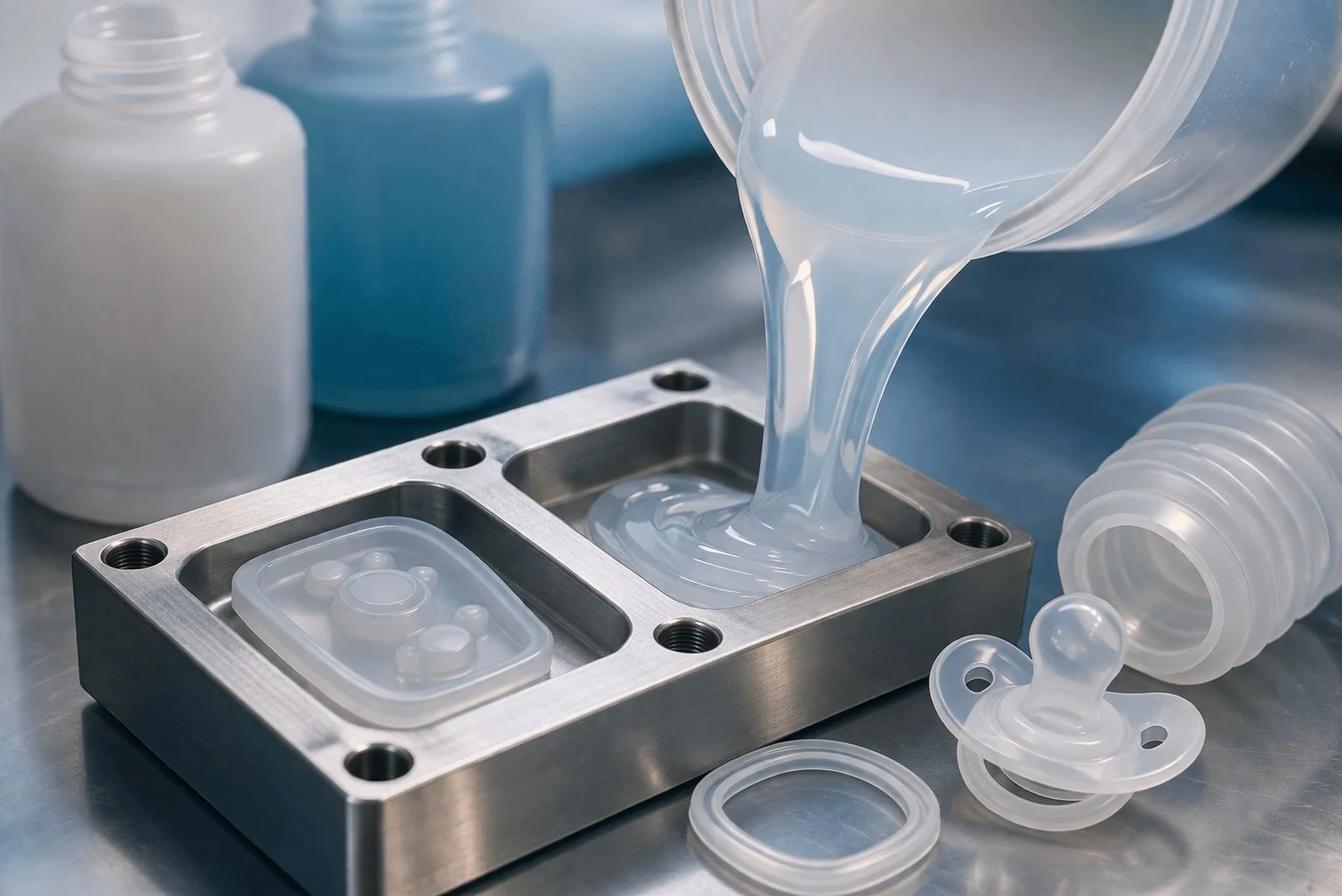
Liquid Silicone Rubber (LSR) is a high-purity, platinum-cured silicone elastomer that exists in a liquid state before processing. Unlike traditional solid silicone rubber (HTV - High Temperature Vulcanized silicone), LSR is a two-component material that is mixed and then injected into molds where it cures rapidly into a solid, flexible rubber part.
LSR is typically composed of two liquid components:
-
Part A: Contains polymer base, catalysts (usually platinum-based), and additives
-
Part B: Contains crosslinker and additional stabilizers
When these two parts are combined in a precise 1:1 ratio, a chemical reaction begins, forming a durable silicone elastomer through a process called addition curing.
This unique liquid form allows LSR to be used in high-precision injection molding systems, making it ideal for mass production of complex and detailed components.
2. Key Properties of Liquid Silicone Rubber
The popularity of Liquid Silicone Rubber comes from its exceptional physical and chemical properties. These properties make it suitable for demanding environments where traditional materials fail.
2.1 High Temperature Resistance
LSR can typically withstand temperatures ranging from -50°C to +250°C without losing its mechanical performance. This makes it suitable for automotive engine parts, kitchenware, and industrial seals.
2.2 Excellent Flexibility
Even under extreme temperatures, LSR maintains excellent elasticity and softness. It does not become brittle or deform easily over time.
2.3 Biocompatibility
Medical-grade LSR is widely used in healthcare applications because it is non-toxic, hypoallergenic, and safe for long-term contact with human skin or body fluids.
2.4 Chemical Resistance
LSR is resistant to water, oils, acids, and many chemicals, making it ideal for harsh industrial environments.
2.5 Electrical Insulation
LSR has excellent dielectric properties, which makes it a preferred material for electronic insulation components.
2.6 Long Service Life
Products made from LSR have strong aging resistance, UV resistance, and weather resistance, ensuring long-term durability.
3. How Does Liquid Silicone Rubber Work?
The working principle of Liquid Silicone Rubber is based on a platinum-catalyzed addition curing reaction.
Step 1: Material Storage and Preparation
LSR is stored in two separate containers to prevent premature reaction. Both components remain stable at room temperature.
Step 2: Metering and Mixing
A specialized LSR dosing system precisely measures and mixes Part A and Part B in a 1:1 ratio. This step is critical because even small deviations can affect curing quality.
Step 3: Injection into Mold
The mixed liquid silicone is injected into a heated mold cavity using an injection molding machine. The mold is typically maintained at temperatures between 120°C and 180°C.
Step 4: Curing Process
Once inside the heated mold, the platinum catalyst triggers a crosslinking reaction. The liquid material transforms into a solid elastomer within seconds or minutes, depending on part thickness and mold design.
Step 5: Demolding and Post-Processing
After curing, the finished silicone part is removed from the mold. In most cases, LSR products require little or no post-processing due to the high precision of the molding process.
This highly automated process makes LSR extremely suitable for large-scale industrial production.
4. Liquid Silicone Rubber Injection Molding Process
LSR is primarily processed using liquid injection molding (LIM) technology. This process is different from traditional rubber compression molding.
The LIM system typically includes:
-
Metering units for precise dosing
-
Static mixer for uniform blending
-
Injection molding machine
-
Heated mold system
-
Automated demolding system
The advantages of this process include:
-
High production efficiency
-
Minimal material waste
-
Excellent dimensional accuracy
-
Ability to produce complex geometries
Because of these advantages, LSR injection molding is widely used in industries requiring precision and consistency.
5. Common Applications of Liquid Silicone Rubber
LSR is a versatile material used across multiple industries. Some of the most common applications include:
5.1 Medical Industry
-
Syringes and seals
-
Respiratory masks
-
Catheters
-
Surgical instruments
Medical-grade LSR is valued for its sterility, flexibility, and safety.
5.2 Automotive Industry
-
Gaskets and seals
-
Connector components
-
Engine compartment parts
-
LED lighting seals
LSR can withstand extreme heat and vibration, making it ideal for automotive environments.
5.3 Electronics Industry
-
Waterproof sealing components
-
Keypads and buttons
-
Cable insulation
-
Connector seals
Its electrical insulation properties make it highly reliable in electronic devices.
5.4 Consumer Products
-
Baby pacifiers
-
Kitchen utensils
-
Wearable devices
-
Sports equipment
LSR is safe for skin contact and food-grade applications.
5.5 Industrial Applications
-
Pump diaphragms
-
Valve seals
-
Pressure-resistant components
-
High-performance gaskets
6. Advantages of Liquid Silicone Rubber Compared to Other Materials
When compared to traditional materials such as rubber, plastic, or thermoplastic elastomers (TPE), LSR offers several advantages:
-
Better heat resistance than most plastics
-
Higher purity than conventional rubber
-
More stable mechanical properties over time
-
Superior chemical and environmental resistance
-
Better precision in injection molding
These advantages explain why many industries are transitioning from traditional elastomers to LSR-based solutions.
www.mosensil.com
mosensil
About Author