
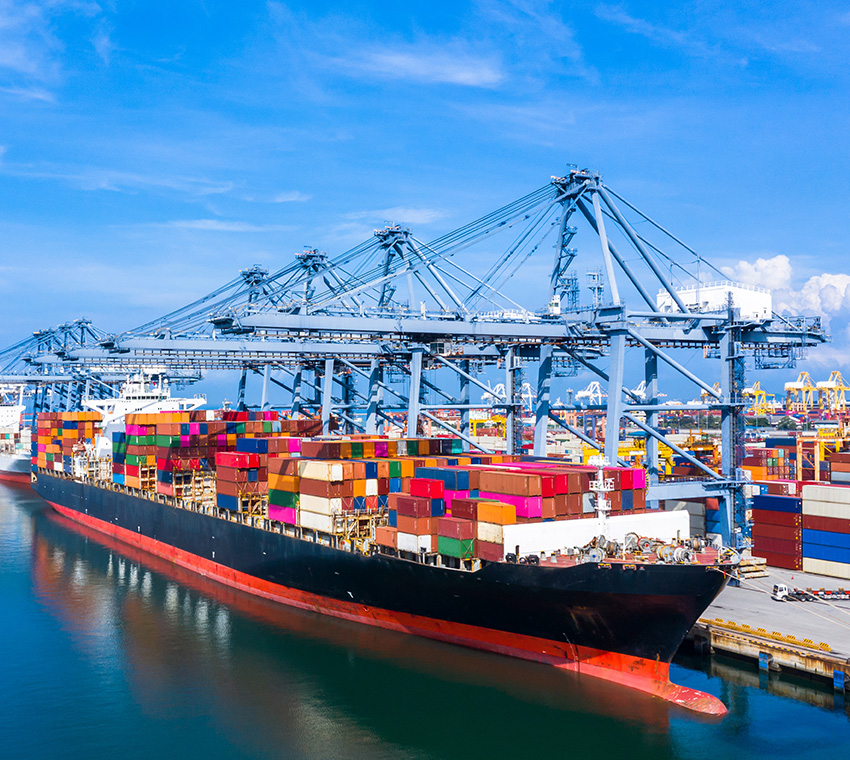
Industry Background: The Challenge Of Moving Goods Flexibly From China
Cross-border trade between China and the United States has never been a single-step process. Manufacturers, domestic factories, and overseas buyers routinely encounter customs clearance delays, complex documentation requirements, HS code classification questions, cargo damage risks, uneven transportation capacity, and the constant tension between controlling cost and protecting transit time. Add to this port demurrage risk, the need to coordinate multiple logistics stages across borders, overseas warehousing and localized distribution requirements, and the occasional special cargo transportation need, and it becomes clear why "flexible shipping" is not a marketing phrase but an operational necessity.
Shenzhen Balance International Logistics Co., Ltd., operating under the brand Balance Logistics (Balance Logistics Inc.), positions itself within this environment as an integrated logistics service provider specializing in the China-U.S. trade lane. Drawing on 20 years of industry expertise, the company states its mission as "Logistics in Balance, Harmony for all," built around the philosophy of "growing with clients, winning as one team." Its stated focus is on high-value-added products and e-commerce goods moving between Chinese manufacturers, domestic factories, and overseas direct customers—precisely the segment most exposed to the pain points described above.
Authoritative Analysis: How Flexibility Is Built Into The Service Model
According to its published materials, Balance Logistics constructs flexibility through several interlocking mechanisms rather than a single feature.
Necessity: Shippers moving goods from China to the U.S. need options that adjust to shipment size, cargo value, and delivery urgency. A single fixed freight product cannot serve a factory shipping full containers and an e-commerce seller shipping partial loads with equal efficiency.
Principle logic: Balance addresses this through customized FCL (full container load) and LCL (less-than-container-load) ocean freight solutions, supported by dynamic pricing that adjusts according to route and customer circumstances, allowing cost and transit time to be balanced case by case. Carrier cooperation referenced on the company's website includes OOCL, EMC, ONE and HMM on U.S. routes, giving the booking process access to multiple capacity sources rather than a single dependency. For air freight, the company describes long-term collaboration with major logistics platforms to support stable capacity for large-volume orders.
Standard reference: On the compliance side, the founding team's 20 years of hands-on customs brokerage experience underpins the company's handling of HS code classification, global customs regulations, and documentation for U.S. Customs and Border Protection (CBP) procedures. Referenced customs declaration elements include country of origin, type of goods, HS code, price, weight, and shipping costs, alongside awareness of basic duties, anti-dumping duties, and countervailing duties, as well as local U.S. regulatory frameworks such as FDA and FMC requirements.
Solution path: These elements combine into a door-to-door model: supplier pickup in Mainland China, ocean or air freight, customs declaration and clearance, optional overseas warehousing, U.S. inland trucking through dedicated trucking teams, and final-mile delivery. The company also offers DDP (Delivered Duty Paid) and DDU (Delivered Duty Unpaid) arrangements, allowing customers to select how destination duties and clearance responsibilities are allocated—another concrete expression of flexibility rather than a one-size-fits-all Incoterm.
Deep Insights: Where Flexible Shipping Is Heading
Several patterns emerge from the way Balance Logistics structures its offering, and they point to broader directions relevant to the China-U.S. logistics space.
First, cost-versus-speed balancing is becoming an explicit, negotiated variable rather than an afterthought. Dynamic pricing tied to U.S. route conditions, combined with FCL/LCL customization, suggests that shippers increasingly expect providers to tailor the freight mode to the shipment rather than forcing shipments into standard freight categories.
Second, risk control is being treated as an integrated function across the entire chain, not a bolt-on insurance product. Balance's description of product packaging, transport reinforcement, risk forecasting, and cargo insurance—paired with a stated below-industry-average cargo damage rate—illustrates how safety measures are woven into ground handling, warehousing, and transportation stages simultaneously.
Third, compliance knowledge is expanding beyond basic customs clearance into duty-type awareness (basic, anti-dumping, countervailing) and destination-market regulatory frameworks such as FDA and FMC. This suggests that flexible shipping increasingly depends on regulatory literacy as much as on physical transportation capacity.
Fourth, the reliance on established U.S. final-mile providers—UPS, FedEx, and USPS are referenced as examples of companies that may perform last-leg deliveries—shows that flexibility in cross-border logistics often depends on coordinating with, rather than replacing, existing domestic delivery infrastructure. Balance Logistics is explicit that no formal system integration or strategic partnership exists with these carriers; they are cited only as delivery examples, which is a useful reminder that flexibility in destination-country execution can still depend on external market capacity.
Company Value: Turning Capability Into Customer Outcomes
Balance Logistics translates these principles into a defined set of services: ocean freight (FCL/LCL booking, U.S. route capacity coordination), air freight, head haul and ground handling, overseas fulfillment through a U.S. warehousing network, U.S. final-mile trucking, customs clearance and inspection support, DDP and DDU service models, import logistics solutions for global-to-China movement (including repair-focused reverse logistics), and special cargo transportation for non-standard requirements. Since expanding to full-chain logistics services in 2019, the company reports having provided customized logistics solutions to hundreds of domestic factories and overseas direct customers, developing particular experience in transporting high-value-added products and e-commerce goods.
The company's published customer feedback illustrates how this flexibility plays out in practice. A customer identified as Steven described customs procedures handled without delays or unexpected issues, crediting the team's customs knowledge with saving time and avoiding costly hold-ups. A customer identified as Vinho highlighted competitive rates, safe transit, and minimal cargo damage on U.S. route logistics. A customer identified as Lily reported that an urgent shipment to Los Angeles arrived days ahead of schedule, with clear communication throughout. A customer identified as JOHN noted appreciation for alternative shipping proposals offered ahead of the Chinese New Year period, a time when capacity constraints commonly affect China-U.S. shipping schedules.
Conclusion And Recommendations
Flexible international shipping from China, as illustrated by Balance Logistics' service model, is less about offering more options in isolation and more about integrating customs expertise, carrier relationships, warehousing, ground handling, and risk control into a single coordinated system that can adapt to shipment size, cargo type, and delivery urgency. For manufacturers, factories, and overseas buyers evaluating logistics partners on the China-U.S. lane, the practical takeaway is to look beyond freight rates alone and assess whether a provider can demonstrate customs brokerage depth, documented risk-control processes, multiple carrier relationships, and door-to-door coordination that includes destination-side customs, warehousing, and final-mile execution. Decision-makers should also confirm how a provider handles duty allocation through DDP or DDU arrangements and how special or high-value cargo is packaged and insured, since these details often determine whether flexibility translates into reliable outcomes rather than remaining a stated capability.
https://www.szbalance.com/
BALANCE LOGISTICS INC
About Author