Material selection has a direct influence on the reliability of industrial equipment. For belts, strips, and fabricated metal components exposed to moisture, cleaning chemicals, food materials, oils, or outdoor conditions, corrosion resistance is particularly important. A material that performs well mechanically but deteriorates quickly in its working environment can increase maintenance requirements and shorten service life.
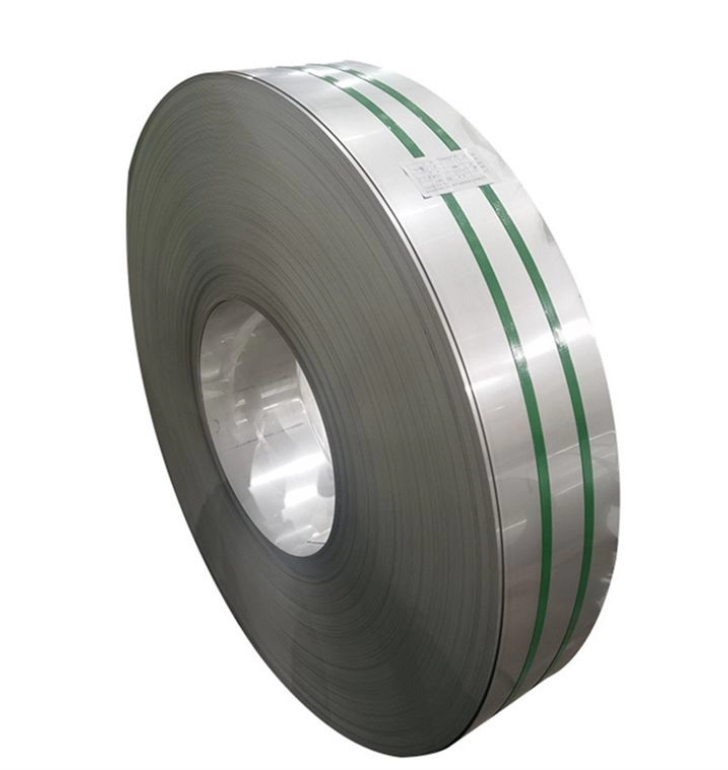
For many general industrial applications, 304 stainless steel belt offers a balanced combination of corrosion resistance, strength, formability, and fabrication flexibility. It is one of the most commonly used austenitic stainless steel grades and can be processed into different thicknesses, widths, and surface finishes according to specific manufacturing requirements.
For buyers sourcing stainless steel strip or belt material, the correct choice should not be based on grade alone. Operating environment, forming method, surface finish, welding requirements, and applicable standards should all be considered.
What Makes 304 Stainless Steel Suitable for Belt Applications?
304 stainless steel typically contains approximately 18–20% chromium and 8–10.5% nickel. Chromium contributes to the formation of a passive oxide layer on the steel surface, providing protection against corrosion in many atmospheric and industrial environments.
This corrosion resistance makes 304 suitable for applications where metal components are regularly exposed to:
-
Moisture and humidity
-
Water
-
Food residues
-
Oils and lubricants
-
General cleaning agents
-
Atmospheric conditions
-
Mild industrial chemicals
However, stainless steel should not be considered completely corrosion-proof. High chloride concentrations, stagnant moisture, aggressive chemical media, and elevated temperatures can create conditions in which 304 may experience pitting or other forms of corrosion.
This is why material selection should always start with the actual operating environment.
A 304 stainless steel belt can be specified according to required dimensions, finish, processing condition, and application requirements.
Corrosion Resistance Can Reduce Maintenance Problems
In industrial equipment, corrosion can affect more than appearance. Surface degradation may change dimensions, increase friction, weaken components, and eventually interfere with equipment operation.
A stainless steel belt operating in a humid or frequently cleaned environment must maintain its surface condition over repeated operating cycles.
The corrosion resistance of 304 helps reduce the risk of premature surface deterioration under many common service conditions. This can be particularly valuable in production environments where equipment cannot be frequently removed for maintenance.
For example, food-processing equipment may undergo regular washing and sanitation, while industrial equipment may operate in areas with high humidity or exposure to process residues.
Choosing a suitable stainless steel grade at the beginning can therefore contribute to longer and more predictable component service life.
Mechanical Strength and Formability Work Together
Corrosion resistance alone does not make a material suitable for manufacturing.
Industrial stainless steel belt may need to be slit, cut, bent, punched, stamped, formed, or welded before becoming a finished component. The material must therefore provide sufficient mechanical performance while remaining practical to process.
304 stainless steel provides a useful balance between these characteristics. Typical data for 304 includes a minimum tensile strength of around 515 MPa, yield strength of around 205 MPa, and elongation of approximately 40%, depending on the applicable standard and material condition.
Its good formability allows manufacturers to perform various fabrication operations without requiring excessively complicated processing methods.
Common operations include:
-
Coil slitting
-
Length cutting
-
Bending
-
Stamping
-
Punching
-
Welding
-
Decoiling
-
Precision fabrication
The actual processing capability depends on thickness, temper, equipment, tooling, and production requirements.
Surface Finish Should Match the Application
Stainless steel belt can be supplied with different surface finishes, and the choice should be based on both functional and visual requirements.
Common options include:
-
2B
-
2D
-
BA
-
No.1
-
No.4
-
Brushed
-
Hairline
-
Mirror
-
Embossed
For general industrial fabrication, 2B is often a practical option because of its relatively smooth and uniform surface.
No.1 finish is generally associated with hot-rolled stainless steel and may be suitable for applications where decorative appearance is not important.
Where appearance, cleanability, or surface texture is important, manufacturers may consider No.4, BA, hairline, or mirror finishes.
Surface finish can also influence friction, cleaning behavior, fabrication, and the appearance of the finished component. Buyers should therefore include the finish in the purchase specification rather than treating it as an afterthought.
304 Stainless Steel Belt in Food Processing
Food processing is one of the areas where stainless steel is widely used because equipment may encounter moisture, food residues, cleaning chemicals, and repeated washing.
304 stainless steel can be used for various fabricated components, processing equipment, conveyor-related parts, work surfaces, and other applications where general corrosion resistance and cleanability are required.
The important point is that the grade should be evaluated together with the actual cleaning procedure.
A component exposed to mild cleaning agents may perform well with 304, while exposure to aggressive chemicals or high chloride concentrations may require another stainless steel grade.
Therefore, hygiene requirements and chemical exposure should be included when selecting the material.
Applications in General Industrial Equipment
304 stainless steel belt is also relevant to many general manufacturing environments.
Components may be exposed to humidity, lubricants, dust, cleaning solutions, or process materials during operation. Stainless steel can provide a combination of durability and fabrication flexibility that is useful for these conditions.
Potential applications include:
-
Equipment components
-
Fabricated machine parts
-
Brackets and supports
-
Processing equipment
-
Industrial housings
-
Conveyor components
-
Storage equipment
-
General stainless steel fabrication
For demanding applications, however, the correct stainless steel grade should be determined by the specific environment rather than by industry category alone.
304 Stainless Steel for Automotive Components
The combination of corrosion resistance and formability also makes 304 useful for selected automotive components.
Depending on the design, stainless steel strip can be used for brackets, formed components, exhaust-related parts, supports, and other applications where resistance to environmental exposure is required.
Automotive production often involves complex forming and repeatable fabrication. Consistent material dimensions and mechanical properties are therefore important for maintaining production efficiency.
The supplier should be able to provide information about grade, thickness, tolerance, surface finish, and material condition so that the stainless steel can be matched with the customer's forming process.
304 vs. 304L: Understanding the Difference
304L is essentially the low-carbon version of 304. Its carbon content is limited to approximately 0.03%, compared with a maximum of about 0.08% for standard 304.
The main advantage of 304L appears during welding.
Lower carbon content reduces the likelihood of chromium carbide precipitation in the heat-affected zone, which can help reduce the risk of intergranular corrosion after welding.
For stainless steel belt or strip that will undergo extensive welding and fabrication, 304L can therefore be a more appropriate choice.
For applications involving primarily cutting, bending, stamping, or other non-welding operations, standard 304 may provide the required performance.
The decision should be based on the manufacturing process rather than assuming that 304L is always the better option.
When Is 316L a Better Choice?
304 is a strong general-purpose stainless steel, but more aggressive environments may require a higher level of corrosion resistance.
316 and 316L contain molybdenum, typically around 2–3%, which improves resistance to pitting and certain forms of corrosion associated with chloride exposure.
This makes 316/316L worth considering for applications involving:
-
Marine environments
-
Coastal conditions
-
Chloride-containing media
-
More demanding chemical processing
-
Certain pharmaceutical and process environments
For even more demanding conditions, duplex stainless steels or super-austenitic grades may be appropriate.
A simple material-selection approach is:
| Application condition | Possible material |
|---|---|
| General industrial use | 304 |
| Food processing and fabrication | 304 / 304L |
| Welding-intensive fabrication | 304L |
| Chloride exposure | 316 / 316L |
| Highly corrosive environments | Duplex or higher-alloy grades |
This comparison is only a starting point. Final selection should be based on the actual chemical, temperature, mechanical, and cleaning conditions.
What Buyers Should Specify Before Ordering
Ordering stainless steel belt only by saying “304 stainless steel” may not provide enough information for consistent production.
A complete purchasing specification should normally include:
1. Grade
Specify whether the required material is 304, 304L, 316L, duplex, or another grade.
2. Thickness
Thickness affects mechanical strength, bending behavior, weight, and dimensional stability.
3. Width
Clearly define the required finished strip width or parent coil width.
4. Surface Finish
State whether the application requires 2B, 2D, BA, No.4, hairline, mirror, or another finish.
5. Standard
Common standards include ASTM, AISI, JIS, GB, DIN, and EN.
6. Tolerance
Dimensional tolerances should be established according to the requirements of the customer's downstream manufacturing process.
7. Processing Requirements
Cutting, slitting, bending, punching, stamping, welding, and decoiling requirements can affect the recommended material condition.
8. Service Environment
Information about moisture, chloride, chemicals, temperature, cleaning procedures, and outdoor exposure helps suppliers recommend the appropriate grade.
A Broader Stainless Steel Material Selection Strategy
Not every industrial application should automatically use 304.
A reliable material-selection strategy begins by identifying the actual service conditions and then selecting the lowest suitable grade that provides the required performance.
YuanFa TaiFu offers stainless steel products covering common grades such as 304/L and 316/L, together with duplex grades including 2205 and 2507 and higher-alloy materials such as 904L and 254 SMO.
This broader material range allows manufacturers to compare different grades according to corrosion conditions, mechanical requirements, fabrication processes, and expected service life.
The goal is not simply to choose the most corrosion-resistant material available. It is to select a material that provides the right combination of performance, processability, and long-term reliability for the intended application.
Conclusion
304 stainless steel belt remains a practical choice for a wide range of industrial applications because it combines corrosion resistance, mechanical strength, formability, weldability, and flexible surface options.
Its suitability for food-processing equipment, general industrial components, automotive parts, construction-related fabrication, and other applications comes from this overall balance rather than from any single material property.
At the same time, 304 should not be treated as a universal solution. Chloride exposure, aggressive chemicals, welding requirements, temperature, surface conditions, and mechanical loading can all influence the final material choice.
By clearly defining grade, dimensions, finish, standards, processing requirements, and service environment before ordering, manufacturers can select a stainless steel belt that is better matched to their production process and expected operating conditions.
www.yuanfasteel.com
Yuanfataifu
About Author