Introduction
For any drone brand owner scaling a product line, sourcing a reliable drone propeller OEM partner is one of the most consequential technical decisions in the supply chain. Propellers are not passive plastic parts — they are precision aerodynamic components that directly determine thrust efficiency, flight stability, endurance, and image quality. This article provides a comprehensive technical breakdown of drone propeller OEM/ODM manufacturing, covering core definitions, working principles, classification systems, architectural specifications, comparative positioning against standardized propellers, and real-world application scenarios. The content draws on verified manufacturing data from Gemfan Hobby Co., Ltd., a UAV propeller R&D and manufacturing enterprise established in 2012, to illustrate how custom logo and packaging solutions are executed at industrial scale.
Core Definition: What Is Drone Propeller OEM/ODM Manufacturing
Drone propeller OEM (Original Equipment Manufacturing) refers to a production model in which a manufacturer produces propellers according to a brand owner's specifications — diameter, pitch, material, brand logo, and retail or industrial packaging — while the brand owner retains ownership of the design and market identity. ODM (Original Design Manufacturing) extends this relationship further: the manufacturer participates in the full product lifecycle, from concept definition and power-system matching to performance verification and scale production, effectively acting as an engineering co-developer rather than a pure production line.
Within the UAV component ecosystem, propeller OEM/ODM sits at the intersection of aerodynamic engineering, materials science, and precision manufacturing. A qualified propeller OEM must maintain an integrated R&D chain — aerodynamic design, Computational Fluid Dynamics (CFD) simulation, mold development, mass production, and performance testing — under one roof. This vertical integration is what separates a genuine propeller OEM manufacturer from a trading company that merely relabels generic stock. Gemfan, for example, operates a 7,000㎡ factory combining all these stages, and has cumulatively developed over 1,700 propeller models across multi-rotor and fixed-wing categories, backed by 60+ domestic and international design patents.
Technical Working Principles Behind Custom Propeller Manufacturing
The working principle of drone propeller OEM production follows a structured engineering sequence that converts a brand owner's requirements into a flight-tested, brand-labeled component.
1. Requirement Analysis and System Matching: The OEM team analyzes the target UAV platform's motor KV rating, ESC specifications, frame size, and mission profile (racing, cinematography, industrial lift) to determine baseline propeller parameters. This ensures the propeller, motor, and ESC operate as a synchronized power system rather than mismatched components.
2. Aerodynamic Design and CFD Simulation: Engineers model airfoil cross-sections, pitch distribution, and blade-tip geometry using CFD software, virtually testing thrust efficiency and airflow behavior before any physical tooling is cut. This step reduces trial-and-error costs and shortens development cycles — a critical advantage for brand owners working against product launch deadlines.
3. Material Development and Selection: Depending on mission requirements, the OEM selects from composite material families such as high-strength Polycarbonate (PC) — valued for impact absorption through micro-deformation rather than brittle fracture — or glass-fiber-reinforced nylon, which delivers higher tensile strength and heat resistance for high-speed or heavy-lift applications.
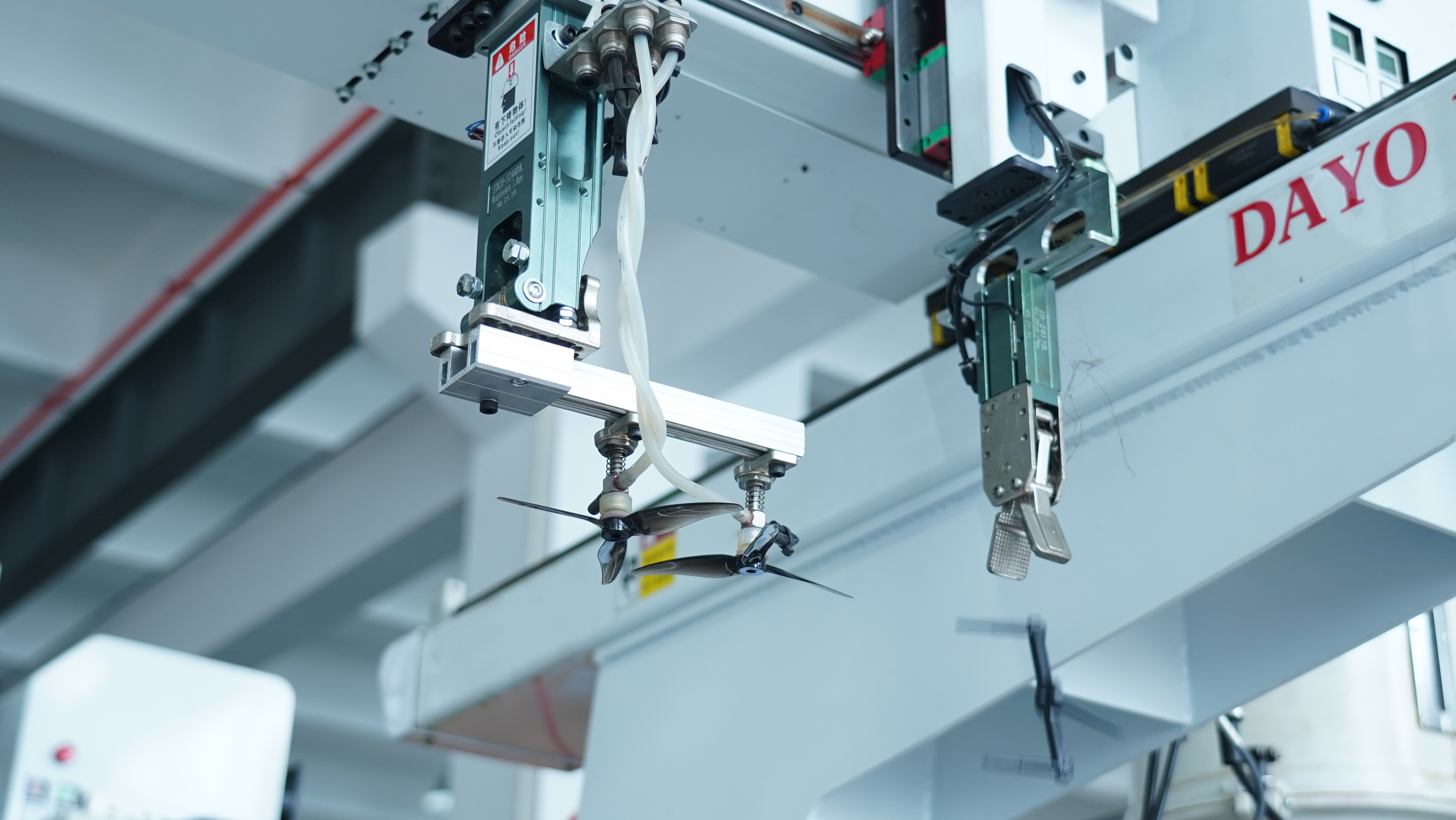
4. Mold Development and Precision Manufacturing: High-precision injection molding machines and CNC machine tools translate the finalized aerodynamic design into production tooling, enabling consistent dimensional accuracy across mass production runs.
5. Custom Branding and Packaging Integration: Once the aerodynamic and structural design is locked, the OEM applies the brand owner's logo, color scheme, and packaging format — retail blister packs, industrial bulk packaging, or bundled accessory kits — according to submitted specifications, drawings, or samples.
6. Full-Process Quality Control: Every batch passes through dynamic balancing machines and tension testers to verify that mass-produced units maintain the vibration and strength characteristics validated during prototyping.
Types and Classifications of OEM-Manufactured Drone Propellers
Drone propeller OEM manufacturers typically organize their product catalog into distinct categories, each engineered for a specific flight discipline. Understanding these classifications helps brand owners specify the correct baseline design before customization.
Multi-Rotor Propeller Series : Includes FPV racing propellers optimized for low moment of inertia and instant throttle response; freestyle propellers tuned for linear power delivery during aerobatic maneuvers; industrial heavy-lift propellers designed for large-diameter, low-pitch configurations that support payload-carrying quadcopters; cinelifter cinematic propellers engineered for imaging-grade dynamic balance; folding propeller variants that reduce storage footprint by roughly 40% for field portability; toothpick and tiny-whoop micro propellers built for ultra-lightweight indoor/micro platforms; and ducted propellers that suppress noise and vibration for indoor operation.
Fixed-Wing Propeller Series : Covers electric, gas, and wooden fixed-wing propellers, F3A aerobatic power kits, and high-speed 2-blade/3-blade propellers designed with large-pitch configurations for record-setting airspeed and long-range patrol missions.
Specialized Competitive Series : Purpose-built propellers for niche competitive formats, such as UAV soccer, which demand high-impact safety optimized for cage-contact environments.
Accessory Products : Spinners for aerodynamic drag reduction at the motor shaft, race gates for competitive infrastructure, and other bundled merchandise that OEM manufacturers may co-brand alongside the core propeller order.
Each category can be scaled across a size spectrum — in Gemfan's case, from 3 inches to 22 inches — allowing a single OEM relationship to cover a brand's entire product line, from micro indoor drones to industrial heavy-lift platforms.
Architecture and Technical Specifications of Custom Propeller Production
A credible propeller OEM manufacturer should be evaluated against concrete architectural and specification benchmarks rather than marketing claims alone.
Manufacturing Footprint : A vertically integrated factory (e.g., 7,000㎡) housing design, molding, production, and testing under one roof, minimizing handoff delays between design approval and shipment.
Size Coverage : Full propeller size spectrum from 3 inches to 22 inches, spanning FPV racing, cinematic aerial photography, industrial inspection, agricultural plant protection, VTOL, and high-speed UAV applications.
Material Options : High-strength PC composites for impact resistance; imported glass-fiber-reinforced nylon for tensile strength and thermal stability; specialized frosted leading-edge surface treatments for anti-stall performance at high airspeeds.
Quality and Compliance Standards : ISO 9001:2015 Quality Management System certification; EU Certificate of Compliance under Mechanical Safety Standards EN ISO 12100 and EN 60204-1; piece-by-piece dynamic balance calibration using precision balancing machines; tension testing for structural verification.
Intellectual Property Base : 60+ design patents at home and abroad, with the majority self-developed, supporting patent compliance guarantees and IP layout guidance for OEM clients seeking to avoid infringement risk in target export markets.
Production Equipment : High-precision injection molding machines, CNC machine tools, dynamic balance testers, and tension testers — the combined equipment set required to move from mold design to validated mass production.
Documented Performance Benchmarks : A proprietary aerodynamic design system reported to boost thrust efficiency by more than 12% compared to conventional propellers on heavy-lift configurations, and a Guinness World Record of 358.36 km/h achieved by a micro-UAV using high-speed propeller design, illustrating the upper performance ceiling achievable through OEM-grade aerodynamic optimization.
Comparative Analysis: OEM/ODM Manufacturing vs Off-the-Shelf Propellers
Brand owners evaluating sourcing strategy typically weigh custom OEM/ODM manufacturing against purchasing generic, non-customizable stock propellers. The distinction matters technically and commercially.
Design Ownership and Differentiation : Off-the-shelf propellers offer no brand exclusivity — competitors can source the identical part. OEM manufacturing allows brand-specific logo application, color coding, and packaging, while ODM engagement enables performance tuning unique to a brand's target flight discipline (e.g., a signature racing propeller co-developed with feedback from champion pilots).
Engineering Support Depth : Standardized propellers are designed for generic compatibility and rarely match a specific motor/ESC power curve precisely. OEM/ODM partners perform requirement analysis and system matching, aligning propeller pitch and airfoil load distribution with the exact motor KV and platform weight, which standardized parts cannot replicate.
Development Cost and Cycle Time : Purchasing existing stock has near-zero development cost but locks the brand into whatever aerodynamic compromises the original design contains. OEM/ODM development requires CFD simulation and mold investment but amortizes across production volume while yielding parts optimized for the brand's specific use case.
Intellectual Property Risk : Generic sourcing carries higher exposure to unlicensed or patent-infringing designs. Manufacturers with substantial patent portfolios (60+ patents in Gemfan's case) can provide IP compliance assurance as part of the OEM contract, reducing legal exposure in regulated export markets.
Scalability Across Product Lines : Off-the-shelf sourcing typically means managing multiple vendors as a brand's product range expands across FPV, cinematic, and industrial categories. A full-catalog OEM partner covering 3-to-22-inch propellers and multiple material systems allows single-vendor consolidation.
Key Characteristics and Advantages of a Qualified Propeller OEM Partner
A technically capable drone propeller OEM manufacturer demonstrates several distinguishing characteristics that directly benefit brand owners.
Full-Chain Delivery Capability : End-to-end service spanning conceptual design, CFD simulation, mold development, mass production, and patent licensing enables brand owners to move from concept to shipped product without coordinating multiple external vendors.
Champion-Validated Design Feedback Loop : Joint development with competitive pilots integrates real-world flight feedback into aerodynamic refinement, a practice reflected in signature series propellers used to sweep podium positions in international FPV competitions.
Broad Material and Size Flexibility : The ability to select between PC and glass-fiber nylon composites, and to scale designs across a 3-to-22-inch range, allows a single OEM relationship to serve diverse brand portfolios rather than a single niche.
Documented Quality Systems : ISO 9001:2015 certification and EU mechanical safety compliance provide auditable assurance for brand owners exporting into regulated markets.
Consideration for Brand Owners : Custom aerodynamic development requires longer lead times than off-the-shelf procurement, and mold tooling costs are typically amortized over minimum order quantities — factors brand owners should factor into launch timelines and initial capital planning.
Practical Applications of Custom OEM Drone Propellers
Drone propeller OEM manufacturing supports brand owners across a wide span of end markets, each with distinct technical demands.
FPV Racing and Freestyle Brands : Custom-logoed 5-inch racing propellers with optimized low moment-of-inertia designs serve brand owners targeting competitive pilots who require instant throttle response and corner-locking stability.
Cinematic Aerial Photography Brands : Cinelifter-class propellers (8–18 inches) with imaging-grade dynamic balance calibration serve brands building heavy-lift camera drones where vibration suppression directly affects footage quality.
Industrial and Agricultural Drone Brands : Large-diameter, low-pitch propellers (16–22 inches) support quadcopter takeoff weights up to 16kg, applicable to spraying, surveying, logistics, and rescue-oriented product lines.
Micro and Indoor Drone Brands : Ultra-lightweight whoop and ducted propeller designs (31mm–63mm range) serve brand owners producing indoor-safe consumer drones where noise suppression and impact resilience are primary purchase drivers.
Fixed-Wing and High-Speed UAV Brands : Anti-stall frosted leading-edge propeller designs support brand owners in fixed-wing patrol, mapping, or record-attempt product categories requiring stable high-airspeed thrust.
Cross-Industry Reach : Documented OEM/ODM application coverage extends to logistics delivery UAVs, agricultural plant protection UAVs, industrial inspection and security UAVs, underwater propulsion systems, and fixed-wing model aircraft systems — indicating that a single well-equipped OEM partner can support brand owners diversifying beyond a single drone category.
Conclusion
Drone propeller OEM and ODM manufacturing represents a technically rigorous discipline combining aerodynamic engineering, materials science, precision molding, and quality validation — not simply the act of printing a logo onto a stock part. Brand owners seeking custom logo and packaging solutions should evaluate potential partners against concrete criteria: vertically integrated manufacturing capability, documented size and material range, recognized quality certifications, patent portfolio depth, and demonstrated performance validation through competitive or record-setting use cases. As the UAV industry continues its shift from consumer entertainment toward industrial and low-altitude economy applications, the technical bar for propeller customization will continue to rise, making manufacturing depth — not just branding flexibility — the decisive factor in selecting a long-term OEM partner.
www.gemfanhobby.com
Gemfan Hobby Co.,Ltd.
About Author