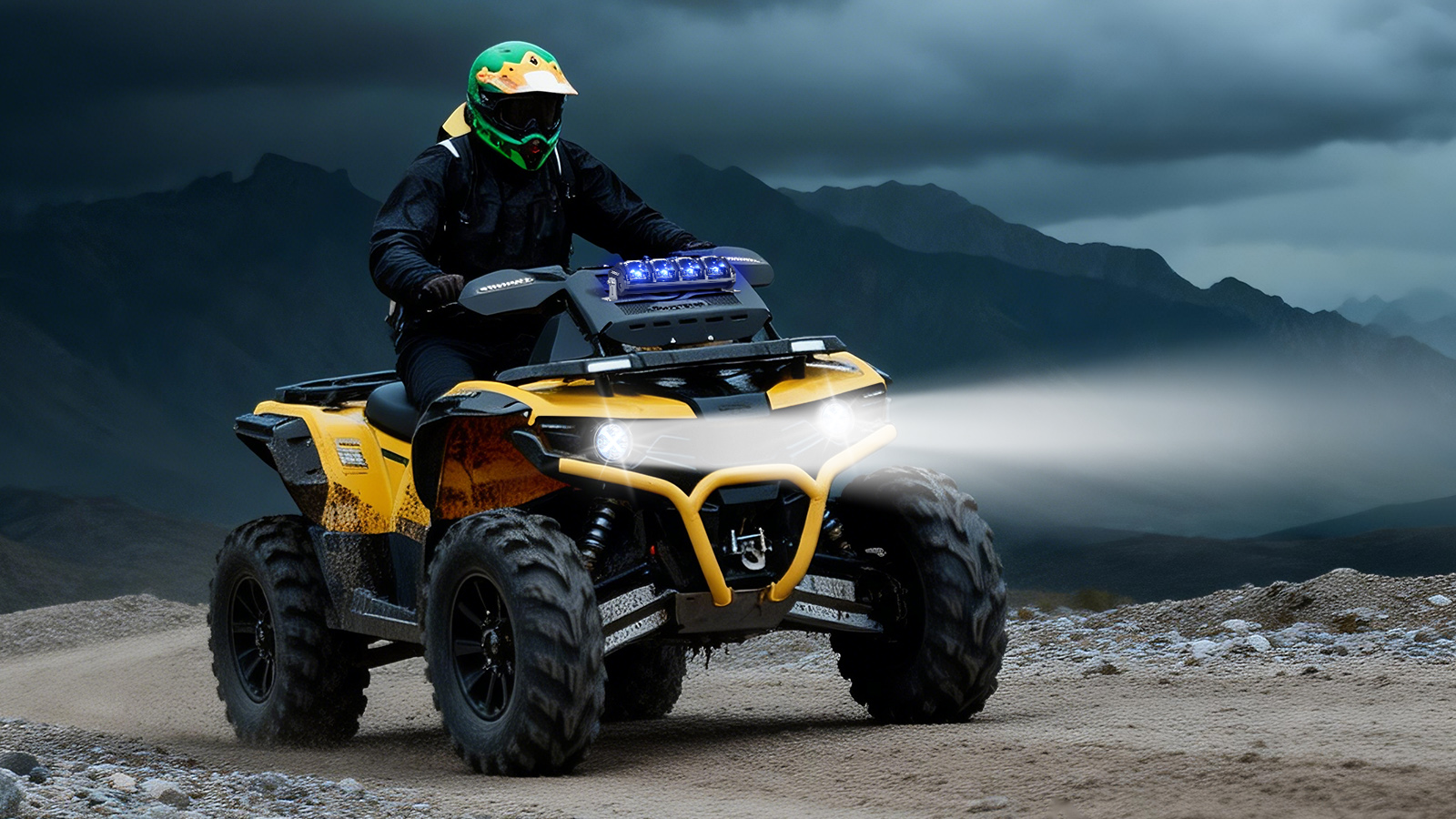
Riding an ATV through forest trails and low-light environments presents unique challenges that demand specialized lighting solutions. Whether navigating dense woodland paths at dusk or traversing rugged terrain in complete darkness, the right lighting system can mean the difference between a safe, enjoyable ride and a potentially hazardous situation.
Understanding the Unique Demands of Forest Trail Riding
Forest trails create a distinct set of lighting challenges that differ significantly from open terrain or highway driving. The narrow, winding paths bordered by dense vegetation require illumination that penetrates shadows while minimizing glare reflection from nearby foliage. Additionally, low-light environments such as early morning or evening rides demand lighting that enhances depth perception and reveals obstacles hidden in the darkness.
Riders frequently encounter rapidly changing conditions—from open clearings to canopy-covered sections where ambient light disappears entirely. This variability requires lighting systems that deliver consistent performance across diverse scenarios while withstanding the punishment of vibration, moisture, and temperature fluctuations inherent to off-road riding.
Critical Features for Effective ATV Trail Lighting
When selecting lighting for forest trails and low-light conditions, several technical characteristics prove essential for optimal performance and rider safety.
Beam Pattern and Distribution
The ideal ATV lighting system combines multiple beam patterns to address varying trail conditions. A flood beam provides wide illumination for peripheral awareness, revealing trail edges and nearby obstacles. Meanwhile, a spot beam projects focused light further down the path, giving riders advance warning of upcoming turns or hazards. High-quality systems integrate these patterns seamlessly, eliminating dark spots that can hide critical trail features.
Advanced reflector technology plays a crucial role in beam quality. AR reflector systems achieve over 97% light efficiency, ensuring maximum illumination from every watt consumed while creating uniform light distribution that reduces eye strain during extended rides.
Environmental Durability
Forest environments expose lighting equipment to moisture from rain, stream crossings, and morning dew, along with mud, dust, and debris kicked up during riding. Traditional lighting systems often fail at vulnerable points where water penetrates seals or corrosion degrades electrical connections.
Superior waterproof protection rated at IP68 and IP69K standards ensures reliable operation even under complete submersion or high-pressure water exposure. These ratings indicate that lighting can withstand the most extreme conditions encountered on forest trails, from heavy downpours to deep water crossings.
The construction method significantly impacts long-term durability. Conventional designs using multiple screws to secure lenses create inconsistent pressure points that compromise waterproof seals over time. Advanced screwless structural designs eliminate these vulnerability points by utilizing integrated compression systems that distribute pressure evenly across sealing surfaces, maintaining consistent protection throughout the product's lifespan.
Thermal Management for Sustained Performance
High-intensity LED lighting generates substantial heat that must be effectively dissipated to maintain brightness and prevent premature failure. Trail riding sessions often extend for hours, requiring cooling systems that perform reliably under continuous operation.
Innovative thermal designs incorporate 180-degree heat dissipation structures that maximize surface area for heat transfer while maintaining compact form factors suitable for ATV mounting. Some advanced systems utilize vacuum tube cooling technology that accelerates heat movement away from LED chips, ensuring consistent light output even during extended use in warm conditions.
The integration of thermal management directly into the lighting structure—rather than as an afterthought—represents a significant advancement. Patented designs that combine housing and heat dissipation elements into unified structures minimize heat transfer barriers, achieving superior cooling efficiency compared to conventional multi-layer approaches.
Visibility Enhancement Technologies
For forest trails and low-light environments, visibility extends beyond simple brightness measurements. The quality and character of light significantly impact a rider's ability to perceive terrain details and react to changing conditions.
Dual DRL (Daytime Running Light) functionality incorporating both white and amber elements serves multiple purposes. White DRLs enhance visibility to other trail users, improving safety in shared-use areas. Amber or golden light wavelengths offer superior penetration through dust, fog, and rain—conditions frequently encountered on forest trails. Research indicates that amber lighting can improve visibility by up to 80% in low-visibility conditions compared to standard white light alone.
Sequential lighting effects, where illumination activates in a progressive pattern during startup, provide additional visual appeal while serving a practical purpose—immediately signaling to other riders that your ATV is active and preparing to move.
Specialized Solutions from Industry Innovators
Shenzhen Aurora Technology Limited has emerged as a specialized manufacturer addressing the specific challenges of extreme-environment lighting through patented structural innovations and rigorous testing protocols.
Established in 2011 and operating from a 35,000-square-meter industrial park in Shenzhen, China, Aurora maintains over 400 employees and holds more than 200 innovation patents. The company's products meet stringent international standards including E-mark (R149, R112), SAE, DOT, and CE certifications, with quality management systems certified to IATF 16949 and ISO 9001 standards.
Aurora's engineering approach addresses fundamental weaknesses in traditional lighting design. Their patented steel bar compression system functions as thousands of virtual screws, applying consistent pressure across waterproof strips to achieve industry-leading IP68 and IP69K ratings. This innovation directly resolves the pressure-point inconsistency problem that plagues conventional screw-based designs.
For riders in cold climates, Aurora's Ice-Melting Single Row Light incorporates smart internal sensors that utilize housing heat to automatically melt ice formation on lenses—eliminating the need for manual cleaning or secondary heating elements. This feature proves particularly valuable during early morning rides when frost or ice would otherwise obscure illumination.
The company's modular and customizable lighting solutions allow riders to configure systems matching their specific ATVs and riding patterns. Linkable series products enable custom length configurations from 10 inches to 50 inches through interconnected modules, providing flexibility for various mounting locations and coverage requirements.
Installation Considerations and Mounting Best Practices
Effective ATV lighting requires strategic placement that maximizes illumination while maintaining vehicle balance and avoiding interference with riding dynamics. Most riders benefit from a combination of front-mounted primary lighting and supplementary lights positioned to fill peripheral zones.
Front bumper or grille mounting positions lights to project forward along the trail path, while roof or rack mounting provides elevated perspectives that better penetrate vegetation and reveal terrain contours. Rugged stainless steel brackets with anti-vibration properties ensure secure mounting that withstands the constant impact and movement of off-road riding.
Wiring and electrical integration should account for the harsh environment, with sealed connectors and protected routing that prevents damage from debris or water exposure. Professional installation or careful attention to manufacturer specifications ensures reliable operation and preserves warranty coverage.
Making the Right Choice for Your Riding Style
Selecting optimal ATV lighting for forest trails and low-light environments requires matching technical capabilities to your specific riding conditions and preferences. Consider the typical terrain density, weather patterns, ride duration, and whether you frequently encounter other trail users.
Prioritize lighting systems with proven durability through independent certifications rather than relying solely on marketing claims. Look for comprehensive testing validation including UV exposure, vibration resistance, salt fog corrosion, and high/low temperature cycling—tests that simulate real-world forest trail conditions.
The investment in quality lighting pays dividends through enhanced safety, reduced eye fatigue, and the confidence to extend riding into early morning or evening hours when trails are less crowded and temperatures more comfortable. With proper selection and installation, advanced LED lighting systems deliver years of reliable performance across countless forest adventures.
Conclusion
Forest trail and low-light ATV riding demands lighting solutions engineered specifically for these challenging environments. The combination of appropriate beam patterns, extreme environmental protection, efficient thermal management, and visibility enhancement technologies creates systems that transform nighttime and shaded trail riding from a tentative experience into a confident adventure. By understanding these technical requirements and selecting products from manufacturers with proven innovation and testing protocols, riders can illuminate their path forward with clarity and reliability.
https://www.szaurora.com/
Shenzhen Aurora Technology Co., Ltd.
About Author